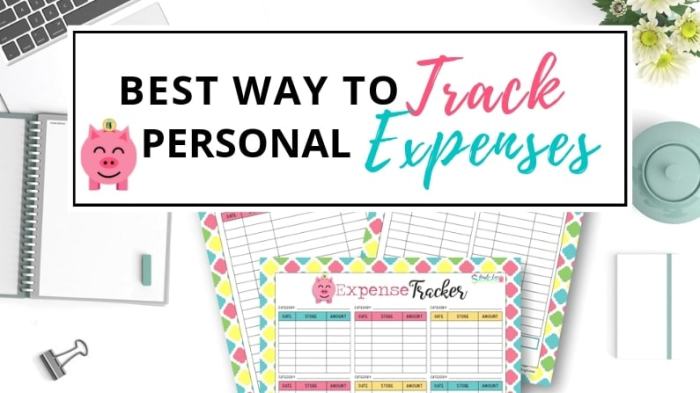
Mastering personal finance often hinges on effectively tracking expenses. Understanding where your money goes is the first step towards achieving financial goals, whether it’s saving for a down payment, paying off debt, or simply gaining a clearer picture of your financial health. This guide provides a comprehensive approach to tracking your expenses, from choosing the right method to leveraging the data for informed financial decisions.
We’ll explore various methods, from simple spreadsheets to sophisticated budgeting apps, helping you select the system that best suits your needs and tech proficiency. We’ll also delve into strategies for accurate data entry, insightful expense analysis, and ultimately, developing effective strategies for reducing spending and achieving your financial aspirations. This isn’t just about recording numbers; it’s about gaining control of your finances and building a secure financial future.
Introduction to Effective Personal Expense Tracking
Personal expense tracking involves meticulously recording all your income and expenditures. This seemingly simple act is crucial for achieving financial stability and making informed decisions about your money. Understanding where your money goes is the first step towards controlling it and building a secure financial future.Effectively tracking personal expenses offers numerous benefits. It provides a clear picture of your spending habits, highlighting areas where you might be overspending.
This awareness empowers you to create a realistic budget, prioritize essential expenses, and identify opportunities to save. Furthermore, accurate expense tracking simplifies tax preparation, facilitates better financial planning for long-term goals like buying a house or investing, and helps you quickly identify potential financial problems before they escalate.
Reasons for Ineffective Expense Tracking
Many individuals struggle to maintain consistent expense tracking. Three common reasons contribute to this challenge. First, a lack of organization and a consistent system often leads to missed entries and inaccurate records. Without a structured approach, tracking becomes overwhelming and easily abandoned. Second, a perception that expense tracking is too time-consuming or complicated deters many from even starting.
The initial effort required can feel daunting, leading to procrastination and ultimately, failure. Finally, a lack of motivation, stemming from a lack of awareness of the long-term benefits, frequently results in inconsistent tracking efforts. People may not fully grasp the immediate and future advantages of understanding their financial behavior.
Setting Up Your Expense Tracking System
Establishing a robust expense tracking system is crucial for effective personal finance management. A well-structured system allows you to monitor your spending habits, identify areas for improvement, and ultimately achieve your financial goals. This section will guide you through setting up a spreadsheet and a simple budget template to facilitate efficient expense tracking.
Spreadsheet Setup for Expense Tracking
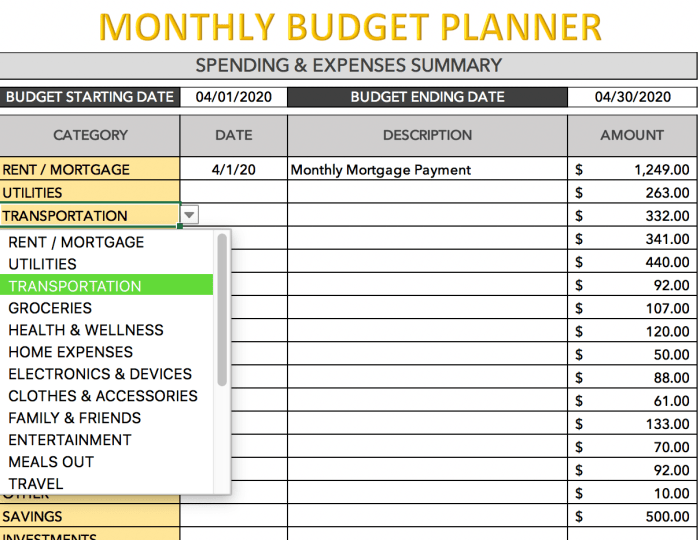
A spreadsheet offers a flexible and easily customizable platform for tracking expenses. Begin by creating column headers to organize your data effectively. These headers should capture essential information about each transaction. Consider including columns for Date, Description, Category, Payment Method, and Amount. For example, a row might contain: Date: 2024-10-27, Description: Groceries at Safeway, Category: Food, Payment Method: Credit Card, Amount: $75.00.
Consistent use of these columns will allow for easy sorting, filtering, and analysis of your spending data later on. Adding a Notes column can also be helpful for recording additional details about a transaction.
Budget Template Design
A simple budget template can be easily created using the same spreadsheet. This template will categorize your expenses, allowing you to visualize where your money is going. Start by listing major expense categories such as Housing (rent/mortgage, utilities), Food (groceries, eating out), Transportation (gas, public transport, car payments), Entertainment (movies, concerts, hobbies), and others based on your personal spending habits.
Next to each category, create columns for budgeted amount and actual amount spent. This allows for direct comparison and identification of areas where you are overspending or underspending. You can also add a column for the difference between the budgeted and actual amounts to highlight areas requiring attention. For example, if your budgeted amount for food is $300 and you spent $350, the difference column will show -$50, indicating an overspending of $50 in that category.
Effective Expense Categorization
Accurate categorization is paramount for meaningful expense analysis. A well-defined categorization system allows for clear identification of spending patterns and areas for potential savings. Consistency is key; stick to your chosen categories to ensure data accuracy over time. Avoid overly broad categories, as this can obscure important details. For instance, instead of simply “Shopping,” consider more specific categories like “Clothing,” “Groceries,” and “Household Goods.” Similarly, “Entertainment” could be broken down into “Movies,” “Dining Out,” and “Hobbies.” Regular review and adjustment of your categories is important to reflect changes in your spending habits.
This process will improve the accuracy and usefulness of your expense tracking over time.
Analyzing Your Expenses
Now that you’ve diligently tracked your expenses for a period of time—ideally a month or more—it’s time to analyze the data and uncover valuable insights into your spending habits. This process will help you identify areas where you can save money and make more informed financial decisions. By understanding your spending patterns, you can take control of your finances and achieve your financial goals more effectively.Analyzing your expense data involves identifying spending patterns and trends.
Look for recurring expenses and those that fluctuate significantly. Are there specific days of the week or times of the month when you tend to spend more? Do certain categories consistently consume a larger portion of your budget than anticipated? Identifying these trends allows you to pinpoint areas requiring attention and adjustment.
Common Areas of Overspending
Many individuals find that certain expense categories consistently consume a larger portion of their income than they would like. Common areas of overspending often include dining out, entertainment (movies, concerts, subscriptions), unplanned shopping, and transportation costs. These categories often involve discretionary spending, making them prime targets for budget adjustments. For example, someone might find they spend significantly more on eating out than on groceries, indicating a potential area for savings.
Similarly, numerous streaming subscriptions might be identified as an unnecessary expense.
Visual Representation of Expense Breakdown
A visual representation of your expenses can significantly aid in understanding your spending habits. A simple bar chart or pie chart can effectively illustrate the proportion of your income allocated to different expense categories.For example, imagine a pie chart representing a monthly budget of $
3000. A sample breakdown might look like this
Housing (30%, or $900), Transportation (15%, or $450), Groceries (15%, or $450), Dining Out (10%, or $300), Entertainment (10%, or $300), Debt Repayment (10%, or $300), and Miscellaneous (10%, or $300). This visual immediately highlights that housing, transportation, and groceries consume the largest portions of the budget, while dining out and entertainment represent areas where potential savings might be found.
The bar chart could represent the same data, showing each category as a separate bar with its corresponding dollar amount. The visual clarity of these charts makes it easy to identify spending imbalances and prioritize areas for budget adjustments.
Effectively tracking your personal expenses is more than just a chore; it’s a powerful tool for financial empowerment. By implementing the strategies and techniques Artikeld in this guide, you can gain valuable insights into your spending habits, identify areas for improvement, and ultimately take control of your financial well-being. Remember, consistent effort and a well-chosen tracking method are key to long-term success.
Start tracking today and embark on a journey towards a more financially secure tomorrow.
Question Bank
What if I don’t have many transactions each month? Is tracking still necessary?
Even with few transactions, tracking remains beneficial. It fosters awareness of spending habits, even small ones, preventing unnoticed overspending.
How often should I review my expense tracking data?
Ideally, review your data weekly or monthly to identify trends and adjust your budget accordingly. More frequent reviews allow for quicker course correction.
What should I do if I miss recording an expense?
Record it as soon as possible. Maintain accuracy; it’s better to be slightly behind than to have inaccurate data.
Can I use expense tracking to prepare for tax season?
Yes, detailed expense tracking can simplify tax preparation, particularly for self-employed individuals or those with significant deductible expenses.


