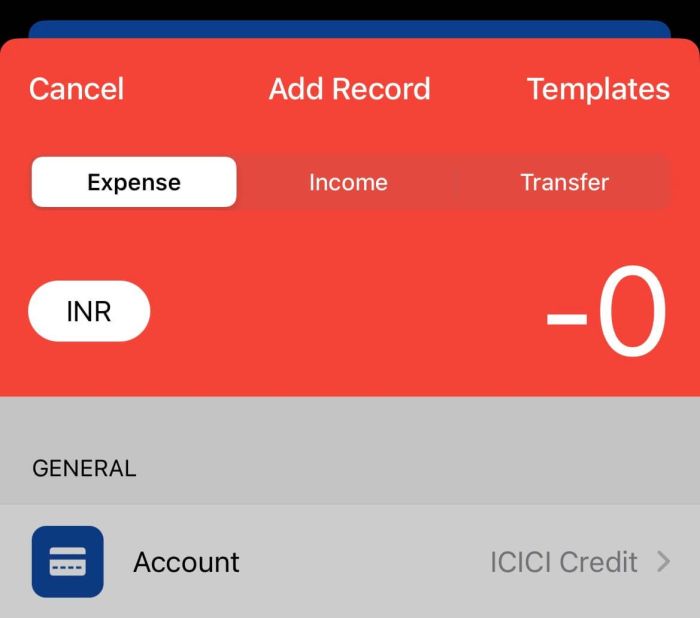
Mastering your finances starts with effortless expense tracking. This guide delves into the world of automated expense management, exploring various methods to streamline your budgeting and financial analysis. From seamlessly integrating your bank accounts and credit cards to leveraging dedicated apps, we’ll navigate the best strategies to gain complete control over your spending habits.
We will cover different approaches, from utilizing the automatic features built into banking apps to exploring the functionalities of dedicated expense tracking software. The process will be broken down into manageable steps, providing you with the knowledge and tools to select the method that best suits your individual needs and technical proficiency. Understanding the security considerations involved in linking financial accounts to third-party applications will also be addressed, ensuring a safe and secure tracking experience.
Introduction to Automatic Expense Tracking
In today’s fast-paced world, managing personal or business finances efficiently is crucial. Manual tracking methods often prove cumbersome and prone to errors, leading to inaccurate budgeting and financial planning. Automatic expense tracking offers a streamlined solution, providing a clearer picture of your spending habits and empowering better financial decision-making.Automated expense tracking systems significantly reduce the time and effort required to monitor expenses.
By automatically categorizing transactions and generating reports, these systems free up valuable time and minimize the risk of human error inherent in manual processes. This improved accuracy allows for more effective budgeting, identifying areas for potential savings, and ultimately leading to better financial health.
Expense Tracking Methods
Understanding the different approaches to expense tracking is crucial for selecting the most suitable method. There are primarily three approaches: manual, automated, and hybrid. Each approach has its strengths and weaknesses, making the choice dependent on individual needs and technological comfort.Manual expense tracking involves meticulously recording every transaction in a spreadsheet, notebook, or dedicated app that requires manual data entry.
While offering complete control, this method is time-consuming and prone to errors. Automated expense tracking leverages technology, typically through connected bank accounts and credit cards, to automatically import and categorize transactions. This method is significantly faster and more accurate, but requires some initial setup and reliance on technology. Hybrid methods combine aspects of both manual and automated approaches.
For example, using an automated app but manually correcting any miscategorized transactions or adding expenses not automatically tracked.
Choosing the Right Expense Tracking Method
The selection of an appropriate expense tracking method depends on several factors. Consider the volume of transactions, technological proficiency, and desired level of detail.Individuals with a small number of transactions and limited technological expertise may find manual tracking sufficient. However, those with numerous transactions or a preference for detailed analysis might benefit from automated systems. A hybrid approach may be ideal for individuals who want the convenience of automation but require some level of manual intervention for greater control or accuracy.
For example, a freelancer with a few clients might manage expenses manually, while a business owner with numerous transactions would benefit from an automated system integrated with accounting software.
Setting Up Automatic Expense Tracking with Banking Apps

Many banking apps now offer integrated expense tracking, simplifying the process of monitoring your finances. Connecting your bank account to these apps allows for automatic categorization and analysis of your spending, providing valuable insights into your financial habits. This eliminates the manual entry of transactions, saving you significant time and effort.Setting up automatic expense tracking typically involves linking your bank account to a chosen expense tracking app.
This connection is usually established through secure APIs, allowing the app to access your transaction history without requiring you to share your login credentials directly. The level of detail and features available varies between apps and banks.
Connecting Bank Accounts to Expense Tracking Apps
The process of connecting your bank account usually begins within the expense tracking app itself. Most apps provide clear instructions and guided workflows. You’ll typically need your bank’s name, account number, and potentially other identifying information. Some apps utilize a secure connection process where you authenticate directly with your bank through their website, enhancing security. After successful connection, the app will start importing your transaction data, usually requiring a few hours to populate fully.
Regular updates throughout the day keep the information current. Remember to check the app’s privacy policy and terms of service to understand how your data is handled.
Comparison of Banking Apps with Expense Tracking Capabilities
The following table compares the features and functionalities of three popular banking apps with built-in expense tracking:
| App Name | Features | Pros | Cons |
|---|---|---|---|
| Mint | Automatic transaction categorization, budgeting tools, credit score monitoring, bill payment reminders. | User-friendly interface, comprehensive features, free version available. | Can be slow to update transactions, some features require a paid subscription. |
| Personal Capital | Detailed investment tracking, retirement planning tools, net worth calculation, expense analysis. | Robust investment tracking capabilities, advanced financial planning features. | Steeper learning curve compared to Mint, free version has limitations. |
| YNAB (You Need A Budget) | Zero-based budgeting, goal setting, scheduled transactions, detailed reporting. | Powerful budgeting methodology, helps users gain control of their finances. | Requires a paid subscription, steeper learning curve than some other apps. |
Security Considerations When Linking Bank Accounts to Third-Party Apps
Linking your bank account to third-party apps involves inherent security risks. It’s crucial to choose reputable apps with strong security measures in place. Look for apps that use encryption and two-factor authentication to protect your data. Regularly review your app’s permissions and ensure they only access the necessary information. Avoid apps that request unnecessary personal data.
Monitor your bank account statements for any unauthorized transactions. If you notice any suspicious activity, immediately contact your bank and the app provider. Consider using a separate email address for your financial apps to add an extra layer of security. Choosing apps with positive user reviews and a strong track record also mitigates risks.
Utilizing Credit Card and Debit Card Integration
Connecting your credit and debit cards to your expense tracking app offers a streamlined approach to automatic expense recording. This integration eliminates the need for manual data entry, saving you significant time and effort in managing your finances. However, it’s crucial to understand both the advantages and potential drawbacks before implementing this feature.Many expense tracking apps offer seamless integration with various financial institutions.
This integration typically involves securely linking your card accounts to the app, allowing for automatic downloading of transaction data. This process usually requires providing your card details and potentially verifying your identity through multi-factor authentication.
Credit Card and Debit Card Integration Advantages
Automatic expense tracking via card integration offers several key benefits. The most significant is the time saved; transactions are recorded automatically, eliminating the need for manual input. This automated process also minimizes the risk of human error associated with manual data entry, leading to more accurate financial records. Furthermore, having your expenses automatically categorized can provide a clear and concise overview of your spending habits, facilitating better budgeting and financial planning.
Credit Card and Debit Card Integration Disadvantages
While offering substantial advantages, card integration also presents some potential drawbacks. Security concerns are paramount; sharing your financial information with a third-party app requires careful consideration of the app’s security protocols and reputation. Data breaches, although rare, are a possibility. Another consideration is the potential for inaccurate data. While most apps strive for accuracy, occasional discrepancies can occur due to processing delays or errors from the financial institution.
Finally, not all apps support all card providers, potentially limiting your choices if you use a less common financial institution.
Linking Cards to an Expense Tracking App: A Flowchart
Imagine a flowchart. The first box would be “Select Expense Tracking App”. This leads to two boxes: “App Supports Your Card Provider?” and “Choose Different App”. If “yes”, it flows to “Enter Card Details (Number, Expiry, CVV)”. This leads to a “Verify Identity (Multi-factor Authentication)” box.
Successful verification leads to “Card Linked Successfully!” and finally “Automatic Expense Tracking Begins!”. If identity verification fails, it loops back to “Enter Card Details”, prompting a double-check of information. If the app doesn’t support your card provider (the “Choose Different App” box), the process restarts from selecting a new app. The entire process highlights the need for accurate information and secure authentication.
Exploring Dedicated Expense Tracking Apps and Software
Many individuals find that dedicated expense tracking apps and software offer a more comprehensive and customizable solution than integrating directly with banking or credit card accounts. These apps often provide advanced features like budgeting tools, report generation, and insightful visualizations of spending habits. Choosing the right app depends on individual needs and preferences, considering factors such as features, pricing, and platform compatibility.
Several popular expense tracking apps and software options are available, each with its own set of strengths. The selection below is not exhaustive but represents a range of popular choices.
Popular Expense Tracking Apps and Software
The following list highlights several popular expense tracking apps and software, emphasizing their key features. Remember to carefully review the terms and conditions of any app before use.
- Mint: Offers free budgeting and financial management tools, including expense tracking, bill reminders, and credit score monitoring. Key features include account aggregation, personalized financial insights, and fraud alerts.
- Personal Capital: Provides a comprehensive financial dashboard with expense tracking, investment management, and retirement planning tools. It excels in its detailed financial overview and advanced investment analysis features. Note that some features require a paid subscription.
- YNAB (You Need A Budget): Emphasizes budgeting and zero-based budgeting methodology. Key features include goal setting, scheduled transactions, and insightful reports. It’s known for its strong community and detailed approach to budgeting.
- Goodbudget: Based on the envelope budgeting system, this app allows users to allocate funds to specific categories. It’s particularly useful for visualizing spending limits and promoting mindful spending habits.
- PocketGuard: Focuses on helping users understand their available spending money after essential bills are paid. Key features include automated transaction categorization, personalized spending insights, and debt management tools.
Expense Tracking App Pricing Comparison
Pricing models vary significantly among expense tracking apps. The table below compares the pricing structures of five popular apps, highlighting the features included in each tier.
| App Name | Pricing Model | Features Included | Platform Compatibility |
|---|---|---|---|
| Mint | Free (with ads) | Basic expense tracking, budgeting, bill reminders, credit score monitoring | iOS, Android, Web |
| Personal Capital | Free (basic); Premium subscription available | Free: Basic expense tracking, investment tracking; Premium: Advanced investment analysis, retirement planning | iOS, Android, Web |
| YNAB | Subscription-based | Detailed budgeting tools, zero-based budgeting, goal setting, report generation | iOS, Android, Web |
| Goodbudget | Freemium (limited free version; subscription for full access) | Envelope budgeting, transaction tracking, multiple account support | iOS, Android, Web |
| PocketGuard | Freemium (limited free version; subscription for full access) | Automated transaction categorization, spending insights, debt management tools | iOS, Android, Web |
Categorizing and Tagging Transactions
Effectively categorizing and tagging transactions is crucial for gaining meaningful insights from your expense data. This process varies slightly depending on the chosen app, but the general principles remain consistent. Let’s illustrate using YNAB as an example.
In YNAB, you would typically import transactions from your linked accounts. The app then allows you to manually review and categorize each transaction. You can assign categories from a predefined list (e.g., Groceries, Entertainment, Housing) or create custom categories to reflect your specific spending habits. Additionally, you can add tags to transactions for further granularity and analysis (e.g., tagging a grocery purchase as “Birthday party” to distinguish it from regular grocery spending).
This detailed categorization and tagging allows for more comprehensive budgeting and analysis of spending patterns.
Manual Entry and Expense Tracking Methods
While automated tracking offers convenience, manually inputting expenses remains a viable option, particularly for those with limited app integration or preferring a hands-on approach. This method allows for greater control and customization, ensuring all expenses are accurately recorded. Understanding the process and best practices for manual entry is crucial for effective financial management.Manual expense entry involves directly inputting your spending details into a chosen tracking system, whether it’s a dedicated expense tracking app or a spreadsheet.
This typically involves recording the date of the transaction, a description of the purchase, the relevant category, the amount spent, and the payment method used. Accuracy is paramount; a single missed entry can skew your overall financial picture.
Methods for Organizing Manual Expense Entries
Effective organization is key to managing manually entered expenses. A well-structured system prevents data overload and allows for quick analysis of spending habits. Consider these approaches for organizing your manual expense entries. Consistent application of your chosen method will ensure the long-term usefulness of your expense tracking.Different methods for organizing manual expense entries offer various advantages. Categorizing by spending type (e.g., groceries, transportation, entertainment) helps visualize where your money goes.
Chronological organization by date allows for easy identification of spending patterns over time. Grouping by merchant simplifies tracking spending with specific businesses. Choosing the method that best suits your needs and preferences is crucial for successful manual expense tracking.
Sample Expense Tracking Spreadsheet Template
A simple spreadsheet can be a powerful tool for manual expense tracking. The following template provides a basic framework; you can customize it to fit your specific needs by adding or removing columns as required. Remember, consistency in data entry is key to obtaining accurate financial insights.
| Date | Description | Category | Amount | Payment Method |
|---|---|---|---|---|
| 2024-10-27 | Groceries at Safeway | Groceries | $75.50 | Debit Card |
| 2024-10-27 | Gas | Transportation | $40.00 | Credit Card |
| 2024-10-28 | Movie Tickets | Entertainment | $30.00 | Credit Card |
| 2024-10-29 | Coffee at Starbucks | Coffee | $5.00 | Cash |
Expense Tracking Best Practices and Tips
Efficient and accurate expense tracking is crucial for effective personal finance management. By implementing best practices and avoiding common pitfalls, you can gain a clear understanding of your spending habits and make informed financial decisions. This section Artikels key strategies to enhance the accuracy and consistency of your automatic expense tracking system.
Achieving accurate expense recording relies on several key factors. Firstly, ensuring your financial institutions are correctly linked to your tracking app is paramount. Incorrect account details or incomplete connections can lead to missing transactions. Secondly, regularly reviewing your tracked expenses for discrepancies is essential. Compare your tracked data with your bank and credit card statements to identify and correct any errors.
Finally, consistently categorizing your expenses helps to generate meaningful reports and provides insights into your spending patterns. Inconsistencies in categorization will lead to inaccurate financial summaries.
Maintaining Consistent Expense Tracking
Consistency is key to deriving meaningful insights from your expense tracking. Regularly checking your tracking system, ideally daily or weekly, ensures that transactions are promptly categorized and any discrepancies are addressed swiftly. Setting reminders or integrating the process into your existing financial routine can significantly improve consistency. For instance, scheduling a 15-minute block each Sunday evening to review and categorize your expenses can become a habitual part of your financial management.
Another helpful strategy is to utilize the features of your chosen tracking app, such as automated categorization rules or recurring transaction identification, to minimize manual intervention and maintain accuracy over time. This automated approach helps to avoid the potential for human error and ensures consistent data entry.
Common Mistakes to Avoid in Automatic Expense Tracking
Several common mistakes can hinder the effectiveness of automatic expense tracking. One frequent error is failing to properly categorize transactions. Automatic categorization systems are not perfect and may misclassify certain expenses, requiring manual correction. Another common issue is neglecting to reconcile tracked expenses with bank and credit card statements regularly. This oversight can lead to significant discrepancies and inaccurate financial summaries.
Finally, relying solely on automatic tracking without periodically reviewing the data can mask errors and lead to flawed financial insights. A proactive approach, involving regular manual checks and corrections, is essential for accurate and reliable expense tracking. For example, a user might automatically categorize a restaurant meal as “groceries” due to a similar merchant name. Regular review would catch this error.
Visualizing and Analyzing Expense Data
Understanding your spending habits requires more than just tracking expenses; it necessitates visualizing and analyzing the collected data to identify trends and patterns. This allows for informed financial decision-making and the development of effective budgeting strategies. By transforming raw expense data into easily digestible visual representations, you can gain valuable insights into your financial health.Effective visualization tools offer a range of report types and chart options, providing a comprehensive overview of your spending behavior.
These tools allow you to quickly identify areas where you might be overspending and areas where you can potentially save money. The key is to choose the right visualization method to answer your specific financial questions.
Expense Report Types
Different report types cater to various analytical needs. Monthly summaries provide a high-level overview of your spending for each month, highlighting total expenditures and significant variations. Category breakdowns offer a detailed analysis of where your money is going, categorizing expenses (e.g., housing, transportation, food) to reveal spending proportions. Customizable date ranges allow for focused analysis on specific periods, such as a holiday season or a particular quarter of the year.
These reports help identify spending patterns over time, allowing you to adjust your budget proactively.
Illustrative Charts and Graphs
Visual representations significantly enhance the understanding of expense data. A pie chart, for instance, effectively illustrates the proportion of spending allocated to different expense categories. Imagine a pie chart where the largest slice represents housing costs (35%), followed by food (25%), transportation (20%), and entertainment (10%), with the remaining 10% distributed among other smaller categories. This instantly highlights the major spending areas, facilitating informed budgeting decisions.A line graph, on the other hand, provides a dynamic representation of spending trends over time.
A line graph plotting monthly expenses over a year could reveal seasonal fluctuations or a gradual increase in spending. For example, a line graph might show a peak in spending during the holiday season (December) and a dip during the summer months (June-August). This allows for a better understanding of spending patterns and enables the prediction of future expenses.Another useful visualization is a bar chart, which can compare expenses across different categories for a specific period.
For example, a bar chart comparing transportation costs across different modes of transport (car, public transport, ride-sharing) would help determine the most cost-effective option. This type of visualization helps make informed decisions about future spending.
Expense Tracking and Budgeting
Effective financial management hinges on a strong understanding of both where your money goes (expense tracking) and where you want it to go (budgeting). Integrating these two crucial aspects creates a powerful system for achieving your financial goals. By combining the data gathered from expense tracking with a well-defined budget, you gain valuable insights into your spending habits and can make informed decisions to improve your financial health.Expense tracking provides the raw data—a detailed record of your spending.
Budgeting, on the other hand, provides the framework—a plan for how you intend to allocate your income. When combined, they offer a comprehensive view of your financial situation, allowing you to identify areas for improvement and track your progress towards financial goals.
Integrating Expense Tracking with Budgeting Tools
Many budgeting apps and software seamlessly integrate with expense tracking tools. This integration often involves connecting your bank accounts and credit cards to automatically import transaction data. The data is then categorized and analyzed, providing a clear picture of your spending against your budget. For example, Mint, YNAB (You Need A Budget), and Personal Capital are popular tools that offer this functionality.
Some users prefer to manually input their transactions into a spreadsheet or budgeting app, while others rely on automatic imports from connected accounts. The choice depends on personal preference and the level of automation desired.
Benefits of Combining Expense Tracking and Budgeting
The synergy between expense tracking and budgeting offers numerous advantages. Firstly, it provides a clear and accurate view of your financial situation. By comparing your actual spending against your budgeted amounts, you can quickly identify areas where you’re overspending or underspending. Secondly, it facilitates informed financial decision-making. The data generated helps you prioritize spending, allocate resources effectively, and make adjustments to your budget as needed.
Thirdly, it promotes financial accountability. Regularly reviewing your expense tracking data in relation to your budget keeps you aware of your spending habits and encourages responsible financial behavior. Finally, it simplifies the process of achieving financial goals, whether it’s saving for a down payment on a house, paying off debt, or building an emergency fund. Having a clear picture of your spending and a plan for your money significantly increases your chances of success.
Setting Financial Goals and Monitoring Progress
Setting clear, measurable, achievable, relevant, and time-bound (SMART) financial goals is the first step. For example, a SMART goal might be “Save $5,000 for a down payment on a car within 12 months.” Once your goals are defined, use your expense tracking data to assess your current spending habits and identify areas where you can make adjustments to align with your goals.
If your goal is to save, analyze your spending to find areas where you can cut back. Regularly monitor your progress by comparing your actual savings against your target savings amount. If you’re falling short, re-evaluate your budget and make necessary adjustments. For example, if you’re consistently overspending on dining out, you might decide to reduce the frequency of restaurant meals or cook more meals at home.
Tracking your progress allows for timely course correction, keeping you on track to achieve your financial objectives.
Advanced Features of Expense Tracking Systems
Many expense tracking systems offer features beyond basic transaction recording, significantly enhancing financial management capabilities. These advanced features automate tasks, provide insightful analysis, and ultimately help users gain a clearer understanding of their finances. This section explores some key advanced features and compares their implementation in different apps.
Advanced features like automated bill payment reminders, subscription tracking, and financial forecasting move beyond simple expense categorization and provide proactive tools for better financial control. These features transform expense tracking from a reactive process of recording past spending to a proactive strategy for managing future finances.
Automated Bill Payment Reminders
Automated bill payment reminders are a crucial feature for avoiding late fees and maintaining good credit. Many apps integrate with bank accounts to identify recurring bills and send notifications before their due dates. This eliminates the need for manual tracking of due dates and reduces the risk of missed payments. For example, an app might detect a monthly Netflix subscription and send a reminder a few days before the payment is due.
This simple feature can save users significant stress and potential financial penalties.
Subscription Tracking
Subscription services are a significant expense for many individuals. Advanced expense trackers often include dedicated subscription management features. These features allow users to input their subscription details (service name, cost, billing cycle) and the app will then automatically track the expenses and alert users to upcoming renewals. This facilitates a clear overview of recurring costs, making it easier to identify potential areas for savings by canceling unused subscriptions or negotiating lower prices.
For instance, an app might highlight that a user has three separate streaming services, prompting them to consider consolidating or canceling one.
Financial Forecasting
Financial forecasting uses historical spending data to predict future expenses and cash flow. More sophisticated apps use machine learning algorithms to analyze spending patterns and provide users with personalized projections. This allows for better budgeting and financial planning. For example, an app might predict upcoming holiday spending based on past spending habits, helping users adjust their savings goals accordingly.
This predictive capability provides a proactive approach to managing finances, allowing for better preparation for future expenses.
Comparison of Advanced Features in Two Expense Tracking Apps
Let’s compare the advanced features of Mint and Personal Capital, two popular personal finance apps. Both offer bill payment reminders and subscription tracking, but their approaches and the sophistication of these features differ. Mint excels in its user-friendly interface and integration with various financial institutions, providing a comprehensive view of one’s financial picture. Personal Capital, on the other hand, offers more robust financial forecasting capabilities, including retirement planning tools and investment analysis, going beyond simple expense tracking.
While Mint’s strength lies in its ease of use and broad integration, Personal Capital provides a more in-depth analysis suitable for users with more complex financial needs. The choice between the two depends largely on the user’s specific needs and financial complexity.
Improved Financial Management Through Advanced Features
The advanced features discussed above significantly improve financial management in several ways. Automated bill payment reminders reduce the likelihood of missed payments and associated fees, while subscription tracking allows for better control over recurring expenses and identification of potential savings. Financial forecasting provides valuable insights into future cash flow, enabling more effective budgeting and financial planning. By automating tasks, providing insightful analysis, and offering proactive tools, these advanced features empower users to take greater control of their finances and make informed financial decisions.
By implementing the techniques Artikeld in this guide, you can transform the often tedious task of expense tracking into a simple, efficient process. Gaining a clear picture of your spending habits empowers you to make informed financial decisions, fostering better budgeting and ultimately leading to improved financial well-being. Remember, the key is finding the right system for you and maintaining consistent data entry for accurate and insightful financial analysis.
Question Bank
What if my bank isn’t supported by my chosen expense tracking app?
Many apps support a wide range of banks, but if yours isn’t included, you might need to consider manual entry or explore alternative apps. Some apps offer manual import options via CSV files.
How often should I reconcile my expense tracking with my bank statements?
Reconciling your accounts at least monthly is recommended to catch any discrepancies early. This helps identify potential errors or fraudulent transactions.
What are the tax implications of using expense tracking software?
Accurate expense tracking can significantly simplify tax preparation, but specific tax implications depend on your location and tax laws. Consult a tax professional for personalized advice.
Can I use expense tracking apps for business expenses?
Yes, many apps cater to both personal and business expense tracking, often offering features like receipt scanning and reporting for tax purposes. Choose an app that meets the specific needs of your business.


