
Navigating shared finances as a couple can be challenging, but effective expense tracking is key to building a strong financial future together. This guide explores various methods, from simple spreadsheets to sophisticated budgeting apps, helping couples understand their spending habits, set realistic financial goals, and foster open communication about money.
We’ll delve into the importance of defining shared financial goals, selecting the right tracking method, and categorizing expenses effectively. Learn how to analyze spending patterns, create a collaborative budget, and adapt your financial plan to life’s inevitable changes. Ultimately, this guide empowers couples to achieve financial harmony and work towards their shared dreams.
Defining Shared Financial Goals
Establishing shared financial goals is a crucial first step for couples embarking on a journey of joint financial management. Aligning your visions for the future of your finances ensures both partners are working towards the same objectives, preventing potential conflicts and fostering a sense of teamwork. Open communication and a collaborative approach are essential to this process.Aligning financial goals before starting expense tracking is paramount because it provides a clear roadmap for your shared spending and saving habits.
Without defined goals, tracking expenses becomes a meaningless exercise; you’ll be collecting data without a clear purpose or direction. Knowing what you’re saving for provides motivation and context for the sometimes tedious process of tracking every expense. It also allows you to prioritize spending and make informed decisions about allocating resources effectively.
Common Financial Goals for Couples
Couples often share a range of financial goals, encompassing both short-term and long-term aspirations. These goals are deeply personal and reflect individual values and priorities. However, some common themes emerge, providing a framework for discussion and planning.
Examples of Short-Term and Long-Term Financial Goals
Short-term goals are typically achievable within one to three years, while long-term goals extend beyond that timeframe. Examples include:Short-Term Goals: Paying off high-interest debt (credit cards), saving for a down payment on a car, creating an emergency fund (3-6 months of living expenses), planning a significant vacation.Long-Term Goals: Purchasing a home, funding children’s education, saving for retirement, investing in a business, paying off a mortgage.
Comparing Financial Goal Setting Methods
Different approaches exist for setting financial goals, each with its strengths and weaknesses. Choosing the right method depends on a couple’s preferences and communication styles.
| Goal Setting Method | Description | Pros | Cons |
|---|---|---|---|
| SMART Goals | Specific, Measurable, Achievable, Relevant, Time-bound | Provides clarity and focus; allows for progress tracking | Can feel restrictive if overly rigid; requires detailed planning |
| Vision Board | Visual representation of financial aspirations | Motivational; fosters shared understanding | Lacks specific metrics; can be less effective for detailed planning |
| Budgeting Apps/Software | Utilize technology to track progress and automate savings | Efficient; provides data-driven insights | Reliance on technology; potential for privacy concerns |
| Financial Advisor | Professional guidance on financial planning | Expert advice; personalized strategies | Costly; potential for conflicting interests |
Categorizing Expenses
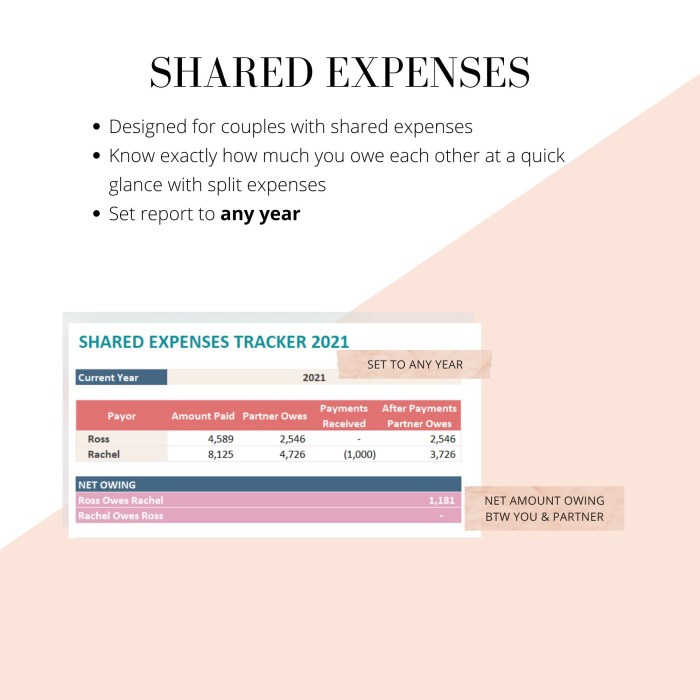
Effective expense tracking hinges on a well-defined categorization system. A clear structure allows couples to gain a comprehensive understanding of their spending habits, identify areas for potential savings, and make informed financial decisions together. Without a consistent system, tracking becomes cumbersome and the resulting data lacks the clarity needed for effective budgeting.Categorizing expenses involves grouping similar expenditures together to provide a meaningful overview of your finances.
This process is crucial for budgeting, identifying spending patterns, and achieving shared financial goals. Inconsistent categorization leads to inaccurate financial summaries, making it difficult to track progress towards financial targets.
Common Expense Categories for Couples
A typical categorization system for couples includes several key areas reflecting the majority of household spending. These categories provide a robust framework for tracking expenses and facilitating effective budgeting. While specific categories might vary slightly depending on individual lifestyles, these provide a solid starting point.
- Housing: Mortgage payments, rent, property taxes, homeowners insurance, utilities (electricity, gas, water, internet, cable).
- Food: Groceries, dining out, coffee shops, meal delivery services.
- Transportation: Car payments, gas, insurance, public transportation, parking fees, tolls.
- Entertainment: Movies, concerts, sporting events, subscriptions (streaming services, gym memberships), hobbies.
- Healthcare: Medical bills, insurance premiums, dental care, prescriptions.
- Personal Care: Toiletries, haircuts, cosmetics.
- Clothing: New clothes, dry cleaning.
- Household Goods: Cleaning supplies, furniture, home repairs.
- Debt Payments: Credit card payments, student loans, personal loans.
- Savings & Investments: Contributions to retirement accounts, savings accounts, investment funds.
- Gifts & Donations: Birthday presents, holiday gifts, charitable donations.
- Travel: Flights, hotels, transportation, activities.
Creating a Consistent Categorization System
Consistency is paramount when categorizing expenses. A standardized approach ensures accurate data analysis and prevents discrepancies that can lead to inaccurate budget projections. Developing a shared understanding of the categories and their definitions from the outset prevents confusion and ensures both partners are consistently using the same system. For example, consistently classifying restaurant meals under “Food” rather than sometimes under “Entertainment” is crucial for accurate budgeting.
This prevents misinterpretations and allows for a clear picture of your overall spending.
Categorizing Ambiguous Expenses
Some expenses might not neatly fit into a single category. For instance, a purchase at a store that sells both groceries and household goods requires careful consideration. In such cases, the most logical approach is to allocate the expense based on the majority of the purchase. If the majority of the purchase was groceries, categorize it under “Food”; if the majority was household items, categorize it under “Household Goods”.
Another example is a business lunch; it could be partially “Food” and partially “Business Expenses” if applicable. In these instances, it may be helpful to subcategorize within the main category to maintain greater detail.
Hierarchical Expense Category Structure
A hierarchical structure enhances the organization and provides a more detailed analysis of spending habits. This approach allows for a granular view of your finances, enabling better decision-making.
- Housing
- Mortgage/Rent
- Property Taxes
- Homeowners Insurance
- Utilities
- Electricity
- Gas
- Water
- Internet
- Cable
- Food
- Groceries
- Dining Out
- Coffee Shops
Tracking Income and Expenses
Accurately tracking income and expenses is crucial for couples to gain a clear understanding of their financial situation and make informed decisions about their shared financial future. This involves diligently recording all sources of income and meticulously categorizing all expenses, both shared and individual. Effective tracking allows for better budgeting, identifying areas for savings, and proactively managing unexpected financial challenges.
Income Tracking Methods
Several methods exist for accurately tracking income sources for both partners. A simple spreadsheet can be used to list each income source, such as salaries, bonuses, freelance work, investment income, and any other sources. Alternatively, budgeting apps offer automated income tracking features, often syncing directly with bank accounts. Maintaining a shared digital document or spreadsheet ensures both partners have access to the same information, promoting transparency and collaboration.
Regularly reviewing and updating this record is vital to ensure its accuracy.
Recording Shared and Individual Expenses
Recording both shared and individual expenses requires a clear understanding of which expenses fall under each category. Shared expenses are those jointly incurred, such as rent or mortgage payments, utilities, groceries, and insurance. Individual expenses are those specific to one partner, like personal subscriptions, clothing, or hobbies. Using a shared spreadsheet or budgeting app, each expense should be meticulously categorized and assigned to either the shared or individual category.
Including a brief description alongside each expense entry enhances clarity and aids in future analysis. For example, under “Shared – Groceries,” entries might include “Trader Joe’s – $75” or “Whole Foods – $120”. Under “Individual – Sarah – Entertainment,” an entry might be “Netflix Subscription – $16”.
Managing Unexpected Expenses
Unexpected expenses, such as car repairs, medical bills, or home emergencies, can significantly impact a couple’s budget. Creating an emergency fund is a crucial strategy for mitigating the financial stress associated with such events. Aiming for 3-6 months’ worth of living expenses in a readily accessible savings account provides a financial safety net. Furthermore, regularly reviewing the budget and identifying areas where savings can be made can help build this emergency fund more quickly.
If an unexpected expense arises, prioritize essential spending, and consider delaying non-essential purchases until the emergency fund can absorb the unexpected cost.
Visual Representation of Income and Expenses
Imagine a simple flowchart. At the top, two inflows represent the individual incomes of each partner (Partner A’s Income and Partner B’s Income). These merge into a larger central box representing the couple’s combined monthly income. From this central box, several outflow arrows branch out, each labeled with a major expense category: Rent/Mortgage, Utilities, Groceries, Transportation, Debt Payments, Savings, and Individual Expenses (split into Partner A and Partner B).
The size of each outflow arrow could visually represent the proportion of the total income allocated to that expense. Finally, a small residual arrow at the bottom represents any remaining funds after all expenses, representing either surplus or deficit for the month. This visual representation clearly shows the flow of money from income sources to various expenses, highlighting the relationship between income and expenditure.
Communication and Collaboration
Open and honest communication about finances is the cornerstone of any successful shared financial journey, especially for couples. Without it, even the most meticulously crafted budget can crumble under the weight of unspoken anxieties, differing priorities, and misunderstandings. Building a strong foundation of financial transparency fosters trust and allows for collaborative decision-making, leading to more effective financial planning and a stronger relationship.Effective communication about finances requires more than just casually mentioning expenses; it involves actively engaging in discussions, actively listening to each other’s perspectives, and finding solutions together.
This necessitates creating a safe space where both partners feel comfortable expressing their concerns, even those related to sensitive topics like debt or spending habits. Avoiding accusatory language and focusing on collaborative problem-solving are essential for productive conversations.
Strategies for Discussing Financial Concerns and Disagreements
Productive discussions about finances involve establishing ground rules, active listening, and a commitment to finding mutually agreeable solutions. This might involve scheduling regular “financial check-in” meetings, where both partners can openly share their financial updates, concerns, and goals. It’s crucial to approach these meetings with empathy and understanding, remembering that differing financial viewpoints often stem from diverse backgrounds and experiences.
Compromise is key; finding a middle ground that respects both partners’ needs and priorities is crucial for long-term financial harmony. For example, if one partner prioritizes saving aggressively while the other prefers more flexibility in spending, a solution might involve setting aside a specific amount for savings while allowing for a pre-determined amount for discretionary spending.
Collaborative Budgeting Techniques
Several techniques can facilitate collaborative budgeting. One effective method is the “zero-based budget,” where every dollar of income is assigned a specific purpose, ensuring that all spending is accounted for and aligned with shared financial goals. Another approach is the “50/30/20 rule,” allocating 50% of after-tax income to needs, 30% to wants, and 20% to savings and debt repayment.
Adapting these methods to reflect individual circumstances and preferences is essential. For instance, a couple might adjust the percentages based on their debt levels or savings goals. Visual aids, such as spreadsheets or budgeting apps, can greatly enhance the collaborative process, providing a clear overview of income, expenses, and progress towards shared financial goals.
A Communication Plan for Regularly Reviewing Expense Tracking Data
Establishing a regular schedule for reviewing expense tracking data together is crucial. This might involve a weekly or monthly review, depending on the couple’s preference and the complexity of their finances. During these reviews, both partners should actively participate in analyzing spending patterns, identifying areas for improvement, and adjusting the budget accordingly. Utilizing shared digital tools allows for real-time access to the data and facilitates collaborative analysis.
For example, a shared spreadsheet or budgeting app can be used to track expenses, and regular meetings can be scheduled to discuss the data and make necessary adjustments. This collaborative approach ensures that both partners are informed and involved in managing their shared finances, fostering a sense of shared responsibility and promoting financial transparency.
Expense Tracking Software and Apps
Choosing the right expense tracking software or app can significantly simplify the process of managing shared finances for couples. Many options exist, each with varying features and approaches to managing money jointly. Understanding the differences between these apps and how they can best support your financial goals is crucial.
Popular Expense Tracking Apps for Couples: A Feature Comparison
Several popular apps cater specifically to couples’ financial needs. These apps often provide features designed to foster collaboration and transparency in managing shared finances. Key features to consider include ease of use, budgeting tools, reporting capabilities, security, and integration with bank accounts.
Shared vs. Individual Accounts within Expense Tracking Apps
The decision of whether to use shared or individual accounts within an expense tracking app depends largely on a couple’s preferences and financial management style. Using shared accounts offers complete transparency and simplifies tracking shared expenses. However, individual accounts can maintain a degree of financial privacy while still allowing for collaborative tracking of shared expenses. A hybrid approach, combining shared and individual accounts, might offer the best balance for some couples.
Key Features of Different Expense Tracking Apps
The following table summarizes key features of some popular expense tracking apps. Note that features and pricing can change, so it’s essential to check the app’s website for the most up-to-date information.
| App Name | Shared Account Option | Budgeting Tools | Reporting Features |
|---|---|---|---|
| Honeydue | Yes | Goal setting, budgeting categories | Spending summaries, personalized reports |
| Goodbudget | Yes | Envelope budgeting system | Transaction history, budget progress |
| Mint | Yes (through linked accounts) | Automated budgeting, spending analysis | Charts, graphs, spending breakdowns |
| EveryDollar | Yes (through linked accounts) | Zero-based budgeting | Detailed transaction history, budget progress |
Utilizing Budgeting Tools and Financial Reports
Effective utilization of budgeting tools and financial reports within expense tracking apps involves setting realistic budgets aligned with your financial goals, regularly reviewing your spending habits, and identifying areas for potential savings. For example, using the budgeting tools in Honeydue, a couple could set a monthly budget for groceries and then track their spending against that budget. The app’s reporting features would then allow them to visualize their progress and make adjustments as needed.
Similarly, Mint’s automated budgeting and spending analysis can provide insights into spending patterns and highlight areas where adjustments might improve financial health. Regularly analyzing these reports empowers couples to make informed decisions about their finances.
Building a Budget
Building a realistic budget is crucial for couples seeking financial stability and achieving shared goals. A well-structured budget allows you to visualize your income and expenses, identify areas for savings, and plan for future investments. This process relies heavily on the expense tracking you’ve already completed.Creating a realistic budget involves carefully analyzing your tracked expenses to determine where your money is going.
This involves identifying both essential and discretionary spending. From this analysis, you can begin allocating funds effectively across various categories. Accurate budgeting requires honest assessment and a willingness to adjust spending habits if necessary.
Budget Allocation Strategies
Once you have a clear picture of your monthly expenses, you can begin allocating funds to different categories. This often involves categorizing expenses into essentials (housing, food, transportation, utilities), debt payments, savings, and discretionary spending (entertainment, dining out, hobbies). The specific allocation will vary depending on your income and financial priorities. For example, a couple with a high housing cost might allocate a larger portion of their budget to housing than a couple living in a more affordable area.
Emergency Fund Strategies
Establishing an emergency fund is vital for financial security. This fund acts as a safety net for unexpected expenses like medical bills, car repairs, or job loss. A common recommendation is to aim for 3-6 months’ worth of living expenses in your emergency fund. Building this fund gradually is key; start with small, consistent contributions and increase the amount as your financial situation improves.
Consider automating transfers to a separate savings account to make saving effortless. For example, if your monthly expenses are $4,000, aiming for a $12,000-$24,000 emergency fund is a good starting point.
Budgeting Methods for Couples
Several budgeting methods can help couples manage their finances effectively. One popular method is the 50/30/20 rule.
The 50/30/20 rule suggests allocating 50% of your after-tax income to needs, 30% to wants, and 20% to savings and debt repayment.
For instance, if a couple earns $6,000 after tax, they would allocate $3,000 to needs (housing, groceries, transportation), $1,800 to wants (entertainment, dining out), and $1,200 to savings and debt repayment. Another method is the zero-based budget, where every dollar of income is assigned a specific purpose, ensuring all income is accounted for. The best method depends on individual preferences and financial goals.
It’s important to find a system that works for both partners and promotes open communication.
Mastering expense tracking as a couple isn’t just about managing money; it’s about building a stronger relationship founded on transparency and shared financial responsibility. By implementing the strategies Artikeld in this guide, couples can gain a clearer picture of their financial health, make informed decisions, and confidently navigate their financial journey together, paving the way for long-term financial success and a more secure future.
Frequently Asked Questions
What if one partner earns significantly more than the other?
Open communication is crucial. Consider a system that reflects both incomes proportionally, or allocate funds based on needs and shared goals. A financial advisor can help structure a fair system.
How often should we review our budget?
Ideally, review your budget monthly to track progress, identify areas for improvement, and adjust for unexpected expenses or changes in income.
What if we disagree on spending priorities?
Establish a collaborative budgeting process where both partners have a voice. Prioritize needs versus wants, and compromise on discretionary spending. Consider seeking financial counseling if disagreements persist.
Are there any tax implications we should consider?
Yes, depending on your country and tax laws, tracking expenses may have implications for tax deductions or filing jointly. Consult a tax professional for specific advice.


