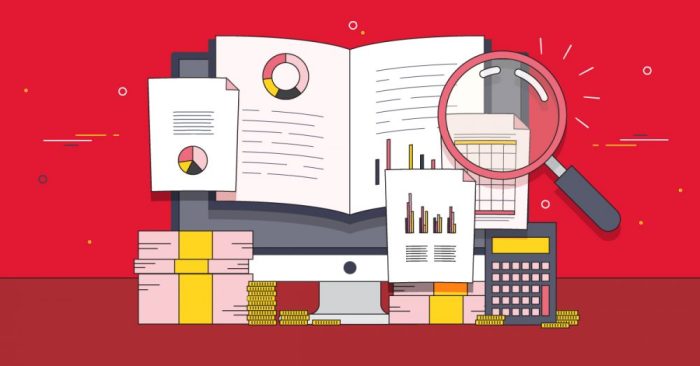
Mastering personal finance often feels daunting, but a crucial first step lies in understanding your spending habits. This guide explores effective strategies for categorizing your expenses, transforming chaotic financial data into a clear roadmap for better budgeting. We’ll delve into various methods, from simple lists to sophisticated budgeting apps, equipping you with the tools to take control of your finances and achieve your financial goals.
We’ll examine different categorization approaches, including the popular 50/30/20 rule and zero-based budgeting, highlighting their advantages and disadvantages. Learn how to adapt these methods to your unique income and lifestyle, and discover how visual representations of your spending can reveal surprising insights and opportunities for savings. Ultimately, this guide empowers you to create a sustainable budgeting system that works for you.
Expense Tracking Strategies
Effective expense tracking is the cornerstone of successful budgeting. Understanding where your money goes allows you to identify areas for improvement and make informed financial decisions. Choosing the right method and consistently using it are key to achieving your budgeting goals.Expense tracking involves meticulously recording all your income and expenses. This provides a comprehensive overview of your financial health, enabling better control over spending habits and informed financial planning.
There are several methods available to track expenses, each with its own advantages and disadvantages.
Expense Tracking Methods
Several methods exist for tracking expenses, each offering a different level of convenience and detail. Manual tracking, using a notebook or spreadsheet, offers complete control but can be time-consuming. Budgeting apps provide automation and insightful visualizations, while dedicated budgeting software offers more advanced features and integration with financial institutions. The best method depends on individual preferences and technical proficiency.
Setting Up an Effective Expense Tracking System
Establishing a robust expense tracking system requires a structured approach. First, choose your preferred method (manual, app, or software). Next, categorize your expenses consistently using a system that aligns with your budgeting goals (e.g., needs vs. wants, or by specific expense categories like housing, transportation, food). Then, begin meticulously recording every expense, including the date, description, category, and amount.
Regularly review your tracked expenses to identify trends and areas for potential savings. Finally, adjust your budget based on your findings and maintain consistent tracking.
Utilizing Receipts and Bank Statements
Receipts and bank statements are invaluable tools for accurate expense tracking. Receipts provide detailed information about purchases, including the date, vendor, and itemized costs. Bank statements offer a chronological record of all transactions, including debits and credits. By cross-referencing these documents, you can ensure the completeness and accuracy of your expense tracking. For example, compare your manually recorded expenses with your bank statement to identify any discrepancies.
If a receipt is missing, you can often find the information within your online banking records.
Importance of Regular Expense Tracking and Review
Regularly reviewing your tracked expenses is crucial for maintaining a healthy financial outlook. Weekly or monthly reviews allow you to identify spending patterns, detect unexpected expenses, and adjust your budget accordingly. This proactive approach prevents overspending and promotes informed financial decision-making. For instance, a monthly review might reveal that dining out costs are exceeding your budget, prompting you to reduce this expense in subsequent months.
Without regular review, it’s easy to lose track of spending and fall short of your financial goals.
Visualizing Expenses
Understanding your spending habits is significantly enhanced by visualizing your data. Transforming raw expense data into a clear, concise visual representation allows for quick identification of spending patterns and areas for potential savings. This section explores how to create and interpret visual aids for effective budgeting.Visualizing expense data through charts and graphs provides a powerful tool for understanding spending patterns.
A well-designed visual can quickly reveal where your money is going and highlight areas for potential cost reduction.
Sample Expense Breakdown Chart
A simple bar chart effectively illustrates a sample expense breakdown. The horizontal axis (x-axis) represents the different expense categories, such as Housing, Transportation, Food, Entertainment, and Savings. The vertical axis (y-axis) represents the amount spent in each category, expressed in dollars. Each category would have a corresponding bar, with the height of the bar representing the amount spent.
For example, if Housing costs $1,000, the bar for “Housing” would extend to the $1,000 mark on the y-axis. A legend could be included to clarify the color-coding of each category if needed. This visual immediately communicates the relative proportion of spending across different areas of the budget. Assume, for instance, that the chart shows Housing at $1000, Transportation at $300, Food at $600, Entertainment at $200, and Savings at $100.
The chart would clearly show Housing as the largest expense, followed by Food, etc. The visual representation allows for a rapid assessment of the budget’s composition.
Identifying Savings Opportunities Through Visual Analysis
Analyzing the visual representation of expenses, such as the bar chart described above, can readily reveal areas for potential savings. For instance, if the “Entertainment” category is significantly higher than expected or desired, a visual comparison against other categories immediately highlights this as a potential area for budget adjustments. Similarly, if the “Savings” category is disproportionately small compared to other categories, the visual immediately signals a need to prioritize saving more.
The visual nature of the chart facilitates a quick and intuitive understanding of where adjustments can be made to better align spending with financial goals. For example, if Entertainment is $500 while Savings is only $50, the visual disparity prompts a reconsideration of spending priorities.
Benefits of Visual Aids in Budgeting
Visual aids significantly improve budgeting understanding and decision-making. They transform complex numerical data into easily digestible information, enabling faster identification of spending trends and patterns. The visual representation aids in quickly assessing the relative importance of different expense categories and facilitates the identification of areas for potential cost reductions. The immediate visual feedback provided by charts and graphs makes budgeting more engaging and less daunting, ultimately improving financial literacy and promoting better financial decision-making.
A simple chart can communicate information far more effectively than a spreadsheet, fostering a more proactive approach to financial management.
Budgeting and Savings Goals
Effective budgeting isn’t just about tracking expenses; it’s about strategically allocating funds to achieve specific financial goals. By categorizing your expenses, you gain a clearer picture of your spending habits, allowing for more informed decision-making regarding your savings. This understanding empowers you to create a realistic budget that supports your financial aspirations.Categorizing expenses is crucial for setting and achieving savings goals.
Understanding where your money goes allows you to identify areas where you can cut back and redirect those funds towards your savings targets. This process transforms budgeting from a mere tracking exercise into a powerful tool for achieving your financial objectives.
Types of Savings Goals and Expense Categorization
Different savings goals require different approaches to budgeting. Categorizing expenses helps allocate funds effectively to meet these varied needs. For example, an emergency fund requires consistent contributions, often from reducing discretionary spending (categorized as entertainment, dining out, etc.). A down payment on a house may necessitate significant savings over a longer period, potentially requiring adjustments to larger expense categories like housing or transportation.
Finally, retirement savings often involve long-term investment strategies, benefiting from consistently allocating funds from income to dedicated retirement accounts.
Strategies for Allocating Funds to Meet Savings Goals
Effective allocation involves a combination of careful planning and consistent action. First, prioritize your savings goals. Determine which goal is most important (e.g., emergency fund first, then down payment) and allocate funds accordingly. Then, analyze your expense categories. Identify areas where you can reduce spending without significantly impacting your lifestyle.
For instance, reducing the “dining out” category by even a small amount can free up considerable funds over time. Finally, automate your savings. Set up automatic transfers from your checking account to your savings accounts dedicated to specific goals. This ensures consistent contributions even when faced with competing expenses.
Adjusting to Unexpected Expenses or Income Changes
Life throws curveballs. Unexpected medical bills, car repairs, or job loss can disrupt even the most meticulously planned budgets. To prepare for these, maintain an emergency fund. This fund acts as a buffer against unexpected expenses, preventing the need to drastically cut back on other savings goals. If unexpected expenses arise, prioritize essential expenses (housing, food, utilities) and temporarily reduce contributions to less urgent savings goals.
If income decreases, reassess your budget and make necessary adjustments. This might involve cutting discretionary spending, seeking additional income sources, or temporarily delaying less urgent savings goals. Regularly review and adjust your budget to reflect changes in your circumstances.
By implementing the strategies Artikeld in this guide, you can transform your approach to personal finance. Categorizing your expenses is not just about tracking numbers; it’s about gaining a deeper understanding of your spending patterns and aligning your finances with your goals. From creating a customized categorization system to leveraging visual tools, this process empowers you to make informed financial decisions, paving the way for greater financial security and peace of mind.
FAQ Resource
What if I have an expense that doesn’t fit neatly into a category?
Create a miscellaneous category for unusual or infrequent expenses. Review this category periodically to see if a new, more specific category is needed.
How often should I review and adjust my expense categories?
Ideally, review your categories at least quarterly or whenever you experience a significant life change (new job, major purchase).
Are there any free budgeting apps I can use?
Many free budgeting apps are available, but their features vary. Research options to find one that suits your needs and operating system.
What if I consistently overspend in a particular category?
Analyze the reasons for overspending. Consider setting a budget for that category, finding ways to reduce spending, or adjusting your savings goals.


