Effective expense tracking is paramount for entrepreneurial success. Managing finances efficiently allows entrepreneurs to make informed business decisions, optimize profitability, and ensure long-term sustainability. This exploration delves into the best expense tracking software options available, highlighting key features, integration capabilities, and best practices to empower entrepreneurs to take control of their financial well-being.
From manual spreadsheets to sophisticated automated systems, the landscape of expense tracking has evolved significantly. This guide navigates the complexities, comparing various software solutions and providing practical advice to help entrepreneurs select the ideal tool for their specific needs and budget. We will cover crucial aspects such as data security, integration with other business tools, and methodologies for efficient expense categorization and reporting.
Introduction to Expense Tracking for Entrepreneurs
Expense tracking is the systematic recording of all business-related expenditures. For entrepreneurs, it’s far more than just bookkeeping; it’s a crucial element of financial health and sustainable growth. Accurately tracking expenses provides the data necessary for informed decision-making, tax preparation, and securing funding.Effective expense tracking offers significant advantages to small business owners. By using a robust system, entrepreneurs gain a clear picture of their cash flow, allowing them to identify areas of overspending and optimize their budget.
This detailed financial record also simplifies tax preparation, minimizing the risk of errors and potential penalties. Furthermore, accurate expense reports are essential when seeking loans or investments, demonstrating financial responsibility to potential lenders or investors.
Challenges of Manual Expense Management
Managing expenses without dedicated software often presents significant hurdles for entrepreneurs. Manually tracking expenses through spreadsheets or notebooks is time-consuming and prone to errors. The lack of automated features makes it difficult to categorize transactions, generate reports, and analyze spending patterns effectively. This manual process can lead to missed deductions during tax season, resulting in higher tax liabilities.
Moreover, the absence of a centralized system makes it challenging to collaborate with accountants or financial advisors, delaying crucial financial analysis and decision-making. The risk of lost or misplaced physical records further compounds the difficulties.
Software Options
Choosing the right expense tracking software is crucial for entrepreneurs. The market offers a variety of options, each with its own strengths and weaknesses. Selecting the best fit depends on individual needs, business size, and budget. This section provides a comparative overview of several popular choices to aid in your decision-making process.
Expense Tracking Software Comparison
The following table compares five popular expense tracking software options, considering their key features, pricing models, and overall pros and cons. Remember that pricing can change, so always check the software provider’s website for the most up-to-date information.
| Software Name | Key Features | Pricing | Pros/Cons |
|---|---|---|---|
| Xero | Invoicing, bank reconciliation, expense tracking, reporting, inventory management (higher tiers) | Subscription based, varying plans with different feature sets. | Pros: Robust features, integrates well with other business tools. Cons: Can be expensive for smaller businesses, steeper learning curve. |
| QuickBooks Self-Employed | Mileage tracking, self-employment tax calculations, expense categorization, simple reporting. | Subscription based, relatively affordable plans. | Pros: User-friendly, excellent for freelancers and solopreneurs. Cons: Limited features compared to more comprehensive solutions. |
| FreshBooks | Invoicing, expense tracking, time tracking, client management, reporting. | Subscription based, various plans depending on the number of clients and features. | Pros: Strong invoicing features, user-friendly interface. Cons: Can become expensive with many clients, some features are only available in higher tiers. |
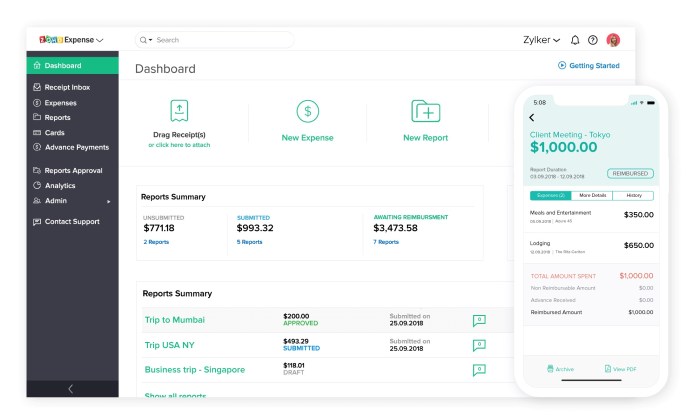
| Zoho Expense | Expense tracking, receipt capture (mobile app), policy compliance features, reporting, integration with other Zoho apps. | Subscription based, tiered pricing based on features and users. | Pros: Mobile-friendly, good for businesses needing strong policy enforcement. Cons: Can be complex for simple needs. |
| Wave Accounting | Invoicing, expense tracking, reporting, payroll (limited features in free version). | Free plan available with limited features, paid plans for advanced features. | Pros: Free plan available, user-friendly interface. Cons: Limited features in the free plan, lacks some advanced features found in paid competitors. |
Ultimately, selecting the right expense tracking software is a crucial step in establishing a strong financial foundation for any entrepreneurial venture. By carefully considering the features, integrations, and security protocols of various options, entrepreneurs can streamline their financial processes, gain valuable insights into their spending habits, and ultimately, achieve greater financial success. This guide serves as a starting point for a journey towards more efficient and informed financial management.
Popular Questions
What is the difference between cloud-based and desktop expense tracking software?
Cloud-based software stores data remotely, accessible from any device with internet access. Desktop software is installed directly on your computer and requires local storage. Cloud solutions offer greater accessibility and collaboration, while desktop options might offer more control over data and potentially better offline functionality.
How can I ensure my expense tracking data is secure?
Choose software with robust security features like encryption, two-factor authentication, and regular security updates. Read privacy policies carefully and ensure compliance with relevant regulations like GDPR. Avoid free or low-cost options with questionable security practices.
Can I use expense tracking software for both business and personal expenses?
Many software solutions allow for categorization of expenses, enabling you to track both business and personal spending separately. This is especially useful for sole proprietors who need to maintain clear financial records for tax purposes. However, always check the software’s capabilities to ensure it meets your specific needs for separation and reporting.


