Effectively managing family finances can feel like navigating a complex maze. From unexpected medical bills to the everyday costs of groceries and transportation, keeping track of expenses is crucial for financial stability and achieving family goals. This guide explores the best expense trackers available, helping families of all sizes and tech-savviness levels gain control of their spending habits and build a brighter financial future.
We’ll delve into various tracking methods, comparing the pros and cons of apps, spreadsheets, and manual methods. We’ll also highlight key features to look for in a tracker, discuss budgeting strategies, and address important security and privacy considerations. Whether you’re a tech-proficient family or prefer a more hands-on approach, we’ll equip you with the knowledge and tools to streamline your expense tracking and make informed financial decisions.
Introduction
Effective family expense tracking is crucial for maintaining financial health and achieving long-term financial goals. It involves meticulously monitoring all income and expenditure within a household, providing a clear picture of where money is coming from and where it’s going. This allows families to identify areas for potential savings, make informed financial decisions, and avoid accumulating unnecessary debt. Without a clear understanding of their spending habits, families risk financial instability and missed opportunities.Family expenses encompass a wide range of costs necessary for daily living and household maintenance.
These can be broadly categorized into several key areas. Understanding these categories is the first step toward effective budgeting and financial planning.
Types of Family Expenses
The various types of family expenses represent the diverse needs of a household. Careful categorization helps in analyzing spending patterns and identifying areas for potential cost reduction. These categories are not mutually exclusive; some expenses may overlap.
- Housing: This includes mortgage payments, rent, property taxes, homeowners insurance, and maintenance costs. For renters, this category might also include security deposits and pet fees.
- Food: Groceries, eating out, and other food-related expenses fall under this category. This can vary significantly depending on dietary choices and family size.
- Transportation: This encompasses car payments, fuel, insurance, public transportation fares, and vehicle maintenance. Families relying on multiple vehicles will naturally have higher expenses in this area.
- Utilities: Electricity, gas, water, internet, and phone bills contribute significantly to monthly expenses. Energy-efficient practices can help reduce these costs.
- Healthcare: Medical expenses, including insurance premiums, co-pays, and prescription drugs, are a significant cost for many families. Preventive care can help mitigate these costs in the long run.
- Childcare: Daycare, preschool, after-school programs, and other childcare expenses can be substantial, especially for families with multiple young children.
- Education: Tuition fees, school supplies, extracurricular activities, and other education-related expenses represent a significant investment for families.
- Personal Care: This includes toiletries, clothing, haircuts, and other personal grooming expenses.
- Entertainment: Movies, concerts, sporting events, and other leisure activities contribute to the family budget. This is an area where families often find opportunities to reduce spending.
- Debt Payments: Loan repayments, credit card payments, and other debt obligations must be factored into the family budget.
Scenario Illustrating Challenges of Unmanaged Finances
Imagine the Miller family, with two working parents and two young children. They receive a combined monthly income of $6,000. Without a proper expense tracking system, they find themselves constantly struggling to make ends meet. They frequently overspend on dining out, unaware of the cumulative impact of these small expenses. Unexpected car repairs lead to financial strain, forcing them to use credit cards with high interest rates.
Their lack of financial awareness leaves them vulnerable to unforeseen expenses and prevents them from saving for their children’s education or retirement. This scenario highlights the critical need for effective family expense tracking to avoid such financial pitfalls.
Types of Expense Trackers
Choosing the right expense tracker is crucial for effective family budgeting. The best option depends heavily on your family’s technological comfort level, the complexity of your finances, and your preferred method of organization. Several distinct approaches exist, each with its own set of advantages and disadvantages.
Families can choose from a variety of methods to track their expenses, each catering to different needs and preferences. The three main categories are expense tracking apps, spreadsheets, and budgeting notebooks. Understanding the pros and cons of each will help families select the most suitable option for their circumstances.
Expense Tracking Apps
Expense tracking apps offer a convenient and often automated way to manage family finances. Many apps integrate directly with bank accounts and credit cards, automatically categorizing transactions. This eliminates manual data entry, saving significant time and effort. Features often include budgeting tools, expense reports, and the ability to share access with family members. However, reliance on technology introduces potential concerns about data security and privacy, and some apps may have subscription fees.
Families with limited tech skills might find the learning curve steep, and connectivity issues can disrupt usage.
Spreadsheets
Spreadsheets, like those in Microsoft Excel or Google Sheets, provide a highly customizable and powerful way to track expenses. Families can design their own tracking systems, tailoring them to their specific needs. This offers complete control over data organization and analysis. Spreadsheets are generally free or inexpensive, and readily available on various devices. However, manual data entry can be time-consuming and prone to errors.
Families need basic spreadsheet skills to use them effectively, and complex formulas may be needed for advanced analysis. Sharing the spreadsheet with other family members requires careful coordination and may not offer the same level of real-time collaboration as dedicated apps.
Budgeting Notebooks
Budgeting notebooks offer a low-tech, hands-on approach to expense tracking. They provide a tangible record of spending, fostering a sense of awareness and control. This method is completely offline, eliminating concerns about technology dependence or data breaches. It also promotes financial literacy, particularly for younger family members who might participate in tracking expenses. However, manual entry is time-consuming and prone to errors.
Summarizing and analyzing data requires manual calculations, and the notebook approach lacks the advanced features of apps or spreadsheets, such as automated categorization and budgeting tools. It also requires dedicated effort to maintain accuracy and organization.
Comparison of Popular Family Expense Tracking Apps
The following table compares three popular family expense tracking apps, highlighting their key features, cost, and ease of use. Note that features and pricing can change, so it’s essential to verify information directly with the app providers.
| Feature | App A (Example: Mint) | App B (Example: YNAB) | App C (Example: Personal Capital) |
|---|---|---|---|
| Automatic Transaction Import | Yes | Yes (with bank connection) | Yes |
| Budgeting Tools | Yes | Yes (Zero-based budgeting) | Yes (Advanced portfolio tracking) |
| Expense Categorization | Automated and customizable | Customizable | Automated and customizable |
| Multiple User Accounts | Yes | Yes | Yes |
| Cost | Free (with ads/premium options) | Subscription-based | Free (with premium options) |
| Ease of Use | Easy | Moderate | Moderate |
Key Features of Effective Family Expense Trackers
Choosing the right expense tracker can significantly improve a family’s financial health. An effective tool simplifies budgeting, promotes financial awareness, and ultimately helps families achieve their financial goals. Several key features distinguish a truly useful tracker from a merely adequate one.
The following features are crucial for effective family expense tracking, facilitating better budgeting and financial management. These features, when implemented effectively, can transform how families approach their finances, moving from reactive spending to proactive planning.
Categorization and Sub-categorization of Expenses
A robust expense tracker needs a flexible system for categorizing expenses. This allows for a detailed view of spending habits. Simple categories like “Food” or “Entertainment” are helpful, but the ability to create sub-categories, such as “Groceries,” “Dining Out,” “Movies,” and “Concerts” under “Entertainment,” provides a much more granular understanding of where money is going. This level of detail reveals areas for potential savings.
For example, Mint allows for extensive customization of categories, while simpler trackers might offer pre-set categories with limited customization. A spreadsheet can also be effectively customized with categories and sub-categories to achieve the same level of detail.
Automated Transaction Import
Manually entering every transaction is time-consuming and prone to errors. Automated import from linked bank accounts and credit cards significantly streamlines the process. This feature saves time and reduces the likelihood of missed transactions or inaccurate data entry, leading to a more accurate reflection of the family’s financial situation.
Many apps, including Personal Capital and YNAB (You Need A Budget), offer this functionality. The level of automation can vary; some may require manual linking and verification, while others offer more seamless integration.
Budgeting and Goal Setting Tools
Beyond simply tracking expenses, a good tracker should facilitate budgeting and goal setting. This involves setting monthly or annual budget limits for various categories and tracking progress towards financial goals, such as saving for a down payment on a house or paying off debt. Visual representations of progress, like charts and graphs, are particularly helpful.
YNAB is well-known for its goal-oriented approach, guiding users to allocate funds strategically. Many budgeting apps, including Mint and EveryDollar, offer features to create and track budgets alongside expense tracking.
Shared Access and Collaboration
For families, shared access and collaboration are vital. This allows all family members to contribute to expense tracking and stay informed about the family’s financial situation. Features like shared accounts, individual spending limits, and the ability to add notes or tags to transactions enhance transparency and accountability.
While many apps allow for multiple users, the level of collaboration varies. Some apps might offer limited shared views, while others provide more robust features for collaborative budgeting and financial management.
Reporting and Visualization
Clear and insightful reports are essential for understanding spending patterns. The tracker should generate reports summarizing expenses by category, time period, and other relevant parameters. Visualizations, such as charts and graphs, make it easier to identify trends and areas for improvement. This data-driven approach helps families make informed decisions about their finances.
Many apps provide customizable reports and charts, offering different perspectives on the data. Even a simple spreadsheet can be used to create custom charts and graphs to visualize spending patterns.
Expense Tracking Methods for Families
Choosing the right method for tracking family expenses is crucial for effective budgeting and financial management. Different approaches cater to varying levels of tech-savviness and organizational preferences. Understanding the strengths and weaknesses of each method allows families to select the most suitable system for their needs.
Manual Logging of Expenses
Manual logging involves meticulously recording every expense in a notebook, spreadsheet, or dedicated budgeting app. This method offers a high degree of control and allows for detailed categorization of spending. However, it can be time-consuming and prone to errors, especially with numerous transactions. Accuracy relies heavily on consistent and diligent record-keeping. Efficiency is directly proportional to the time invested in tracking.
A family with many transactions might find this method cumbersome.
Automated Imports from Financial Accounts
Many budgeting apps and software solutions offer automated imports of transactions from linked bank accounts, credit cards, and investment accounts. This significantly reduces the manual effort involved in tracking expenses. The accuracy of this method depends on the reliability of the data feeds from financial institutions. Occasionally, transactions might be miscategorized or incorrectly imported. Efficiency is greatly improved, as the system automatically updates the expense tracker.
This method is particularly suitable for families comfortable with online banking and technology.
Receipt Scanning
Receipt scanning apps utilize image recognition technology to extract transaction details from receipts. This offers a balance between manual input and automated tracking. The accuracy depends on the quality of the receipt images and the app’s recognition capabilities. Faint print or crumpled receipts can lead to inaccuracies. Efficiency is improved compared to manual logging, but it still requires the user to physically scan or photograph receipts.
This method is a good compromise for families who prefer a less digital approach while still benefiting from some automation.
Setting Up a Basic Family Expense Tracking System Using a Spreadsheet
A spreadsheet provides a straightforward and customizable approach to family expense tracking. Here’s a step-by-step guide:
- Create a Spreadsheet: Open a new spreadsheet in a program like Microsoft Excel or Google Sheets.
- Set Up Columns: Create columns for key information: Date, Description, Category (e.g., Groceries, Housing, Transportation), Payment Method (e.g., Cash, Credit Card, Debit Card), and Amount.
- Categorize Expenses: Develop a consistent categorization system to effectively analyze spending patterns. For example, “Groceries” could be further divided into “Produce,” “Meat,” and “Dairy.”
- Record Transactions: Regularly input all family expenses into the spreadsheet, ensuring accuracy and consistency.
- Use Formulas for Summaries: Utilize spreadsheet functions like SUMIF and SUM to automatically calculate total spending by category and overall monthly expenses. For example,
=SUMIF(Category,"Groceries",Amount)calculates the total spent on groceries. - Regularly Review and Adjust: Periodically review the spreadsheet to identify areas for potential savings and adjust the budget accordingly.
Budgeting and Financial Goal Setting with Expense Trackers
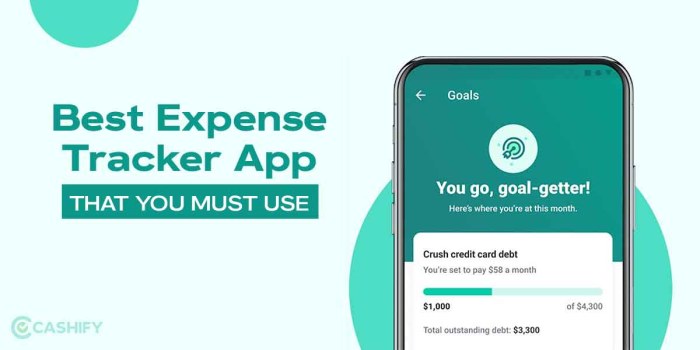
Expense trackers are invaluable tools for families looking to gain control of their finances. They provide a clear picture of where money is going, enabling informed budgeting decisions and the creation of realistic financial goals. By tracking expenses meticulously, families can identify areas for savings and make adjustments to align spending with their income.Expense trackers facilitate budget creation by providing a detailed breakdown of past spending habits.
This data allows families to create a budget that accurately reflects their lifestyle and needs, rather than relying on estimations that may be inaccurate. This data-driven approach is far more effective than guesswork, leading to more realistic and achievable budgets.
Budget Creation Using Expense Tracker Data
Analyzing expense tracker data reveals spending patterns. For instance, a family might discover that dining out constitutes a significant portion of their monthly expenses. This insight allows them to set a realistic budget for restaurant meals, perhaps reducing the frequency or choosing more affordable options. Similarly, identifying high transportation costs might prompt a family to explore alternative commuting methods like carpooling or public transport.
The tracker highlights areas for potential savings, empowering families to make conscious choices.
Setting and Tracking Financial Goals
Expense tracker data is crucial for setting and monitoring financial goals. For example, a family aiming to save for a down payment on a house can use the tracker to determine how much they can realistically save each month after covering essential expenses. By setting a savings goal within the expense tracker, families can monitor their progress and make necessary adjustments to their spending habits if they fall short.
Similarly, families aiming to pay off debt can track their progress, celebrating milestones as they reduce their debt burden. The visual representation of progress offered by many expense trackers is highly motivating.
Sample Budget Template for a Family of Four
A sample budget for a family of four with a combined monthly net income of $6000 could be structured as follows:
| Category | Amount ($) | Percentage (%) |
|---|---|---|
| Housing (Mortgage/Rent) | 1800 | 30 |
| Food (Groceries, Dining Out) | 1000 | 16.7 |
| Transportation (Car Payments, Gas, Public Transport) | 600 | 10 |
| Utilities (Electricity, Water, Gas, Internet) | 400 | 6.7 |
| Healthcare (Insurance, Medical Expenses) | 500 | 8.3 |
| Childcare | 1000 | 16.7 |
| Savings (Emergency Fund, Down Payment, Investments) | 700 | 11.7 |
| Debt Payments (Loans, Credit Cards) | 0 | 0 |
| Other Expenses (Entertainment, Clothing, Personal Care) | 0 | 0 |
Note: This is a sample budget, and percentages may vary depending on individual circumstances and priorities. The “Other Expenses” category can be adjusted to reflect the family’s specific needs and preferences. It is important to regularly review and adjust the budget as needed.
Sharing and Collaboration Features in Family Expense Tracking
Effective family expense tracking hinges on shared access and collaborative features. These features transform a personal budgeting tool into a powerful instrument for family financial management, fostering transparency and accountability among family members. Without collaboration, the expense tracker remains a solitary effort, failing to leverage the collective financial picture of the household.Shared access and collaboration significantly enhance transparency and accountability within a family.
When all members can view the same financial data, everyone understands the family’s spending habits, income sources, and overall financial health. This shared view eliminates the possibility of hidden expenses or misunderstandings about financial commitments. Accountability increases as each member is aware of their spending contributions and their impact on the overall budget. For example, a teenager might be more mindful of their spending on entertainment if they can see the overall family budget and their contribution to potential shortfalls.
Shared Access Implementation
Implementing shared access effectively requires careful consideration of security and privacy. The expense tracker should offer granular control over access levels, allowing parents to oversee the accounts of younger children while maintaining privacy for adult members. Features like individual logins with password protection are crucial, preventing unauthorized access and maintaining data confidentiality. The system should also offer different permission levels: some members might only view the data, while others can add expenses or edit entries.
This flexibility ensures both transparency and the protection of individual privacy. A robust system might allow for different levels of permission for each account, ensuring that everyone’s data is both visible and secure.
Addressing Challenges of Shared Access
Potential challenges associated with shared access primarily revolve around privacy concerns and potential disagreements. Some family members might be hesitant to share their personal spending data, especially if it reveals spending habits they consider private. Solutions involve clear communication about the goals of shared access and assurances that data will be used responsibly. Establishing family financial goals and clearly articulating how shared data contributes to achieving those goals can help alleviate concerns.
For example, setting a family savings goal for a vacation might encourage more collaborative participation and reduce resistance to sharing data. Furthermore, the chosen expense tracking software should allow for customization of visibility levels to accommodate varying comfort levels with data sharing. Families may also establish ground rules around expense categories that remain private.
Security and Privacy Considerations in Expense Tracking
Protecting your family’s financial information is paramount when using expense tracking apps. These apps often handle sensitive data, making security and privacy a critical concern. Understanding the potential risks and implementing best practices is crucial to ensuring your financial information remains secure and confidential.Choosing a secure and reliable expense tracking app requires careful consideration of several factors. Data breaches, unauthorized access, and privacy violations are real possibilities, highlighting the need for robust security measures.
Potential Security and Privacy Risks
Expense tracking apps store a significant amount of personal financial data, including bank account details, credit card information, income sources, and spending habits. This makes them attractive targets for cybercriminals. Potential risks include data breaches resulting from vulnerabilities in the app’s security infrastructure, unauthorized access to accounts through phishing scams or malware, and the potential misuse of personal financial data for identity theft or fraudulent activities.
Furthermore, the app’s privacy policy should be carefully reviewed to understand how the collected data is used, shared, and protected. Lack of transparency in data handling practices can lead to privacy concerns.
Best Practices for Protecting Personal Financial Information
Strong passwords, regularly updated, are the first line of defense. Avoid using easily guessable passwords and consider using a password manager to generate and securely store complex passwords for each app. Enabling two-factor authentication (2FA) adds an extra layer of security, requiring a second verification method (like a code sent to your phone) in addition to your password. Regularly review your app’s security settings and update the app whenever software updates are released to patch any known vulnerabilities.
Be cautious about clicking on suspicious links or downloading attachments from unknown sources, as these can lead to malware infections that compromise your device and app security. Limit the amount of personal information you share within the app beyond what is strictly necessary for its functionality.
Security Features to Look For
Choosing a family expense tracker requires prioritizing security features. Look for apps that offer end-to-end encryption to protect data transmitted between your device and the app’s servers. Data encryption ensures that even if data is intercepted, it remains unreadable without the decryption key. Check if the app complies with relevant data privacy regulations like GDPR or CCPA, indicating a commitment to data protection.
A reputable app developer will have a transparent privacy policy that clearly Artikels their data handling practices. Review user reviews and security audits to gauge the app’s overall security reputation. Apps with robust security measures and a proven track record of protecting user data are a safer choice. Consider apps that offer features like biometric authentication (fingerprint or facial recognition) for added security.
Expense Tracking
Effective expense tracking is crucial for families aiming to achieve their financial goals. Understanding where your money goes is the first step towards making informed decisions and controlling your spending. By diligently tracking expenses and regularly reviewing the data, families can gain valuable insights into their financial health and make necessary adjustments to improve their financial well-being.
Best Practices for Effective Expense Tracking
Consistent and accurate expense tracking requires a structured approach. The following best practices can significantly improve the effectiveness of your family’s expense tracking efforts.
- Choose the Right Method: Select an expense tracking method that suits your family’s tech proficiency and preferences. This could range from a simple spreadsheet to a dedicated budgeting app.
- Track Every Expense: Record every expense, no matter how small. Even seemingly insignificant purchases accumulate over time.
- Categorize Expenses: Organize expenses into meaningful categories (e.g., housing, food, transportation, entertainment) to identify spending patterns.
- Use Automated Tools: Leverage bank account linking features or automatic import functions in apps to streamline the process.
- Regularly Review Transactions: Check your expense tracker frequently – daily or weekly – to catch errors and ensure accuracy.
- Reconcile with Bank Statements: Compare your tracked expenses with your bank statements regularly to identify any discrepancies.
- Involve the Whole Family: Encourage all family members to participate in tracking expenses, fostering a shared understanding of finances.
- Set Reminders: Use reminders to ensure consistent data entry, preventing gaps in your records.
- Back Up Your Data: Regularly back up your expense tracking data to prevent data loss.
- Review and Adapt: Periodically review your tracking methods and adjust as needed to improve efficiency and accuracy.
Benefits of Regular Expense Review and Adjustments
Regularly reviewing your expense tracking data provides a dynamic view of your family’s finances, allowing for proactive adjustments. This enables timely identification of overspending and facilitates adjustments to your budget, preventing potential financial strain. For example, a family might notice consistently high spending on eating out and decide to allocate more funds to home-cooked meals, leading to savings.
Consistent review allows for a responsive budgeting approach, adapting to changing circumstances and unexpected expenses.
Identifying Areas for Potential Savings Using Expense Tracking Data
Expense tracking data provides a clear picture of your family’s spending habits. By analyzing categorized expenses, you can pinpoint areas where savings are possible. For instance, if your entertainment category shows consistently high spending, you could explore more affordable alternatives, like family game nights instead of frequent movie outings. Similarly, analyzing transportation costs might reveal opportunities to reduce fuel consumption or explore public transport options.
A detailed analysis of grocery spending can highlight areas where substitutions with less expensive alternatives could lead to significant savings over time. For example, switching from name-brand items to store brands can result in noticeable cost reductions.
Troubleshooting Common Expense Tracking Challenges
Successfully managing family finances with an expense tracker requires understanding and addressing potential hurdles. While expense trackers offer significant benefits, several common challenges can hinder their effectiveness. Addressing these challenges proactively ensures a smoother and more rewarding experience.
Families often encounter difficulties related to data entry, maintaining consistent usage, and reconciling discrepancies between the tracker and actual bank statements. These issues can stem from various factors, including technological limitations, inconsistent family participation, and a lack of understanding of the tracker’s features. Fortunately, practical solutions exist to overcome these challenges and maximize the benefits of expense tracking.
Data Entry Errors and Inconsistencies
Inaccurate or incomplete data entry is a major obstacle. Missing transactions, incorrect amounts, or miscategorized expenses lead to flawed financial insights. This can result in inaccurate budgeting and flawed financial planning.
Solutions involve implementing several strategies. Firstly, encourage the entire family to participate actively in data entry. Designate specific individuals or use a shared calendar to track expenses. Secondly, utilize features like automated imports from bank accounts and credit cards whenever possible to reduce manual input and potential errors. Thirdly, regularly review and reconcile the tracker’s data with bank statements to identify and correct discrepancies promptly.
Finally, consider employing a double-entry system for critical expenses, where two family members independently record the same transaction for verification.
Inconsistent Usage and Family Participation
Maintaining consistent data entry across all family members is crucial for accurate expense tracking. Without consistent input, the data becomes incomplete and unreliable, rendering the tracker ineffective. This often arises from busy schedules, lack of understanding, or simply forgetting to record expenses.
To improve consistency, establish clear roles and responsibilities within the family. Consider using reminders (e.g., daily notifications on phones) to prompt data entry. Gamify the process with rewards for consistent participation. Regular family meetings to review progress and address concerns can also enhance engagement. Finally, select a user-friendly tracker that simplifies data entry and makes the process less burdensome.
Reconciling Tracker Data with Bank Statements
Discrepancies between the expense tracker and bank statements are common. These discrepancies can arise from timing differences, unrecorded transactions, or data entry errors in either the tracker or the bank statement. Identifying and resolving these discrepancies is essential for maintaining accurate financial records.
Regular reconciliation is key. Schedule a monthly review comparing the tracker’s data with bank statements. Categorize transactions consistently in both the tracker and your bank records. Use bank statement downloads or online banking features to streamline the process. If discrepancies persist, investigate the cause thoroughly.
Contact your bank if necessary to clarify unusual transactions.
Data Entry Error Resolution Flowchart
The following flowchart illustrates the steps to resolve a common data entry error:
Start → Identify Discrepancy (Compare tracker to bank statement) → Verify Transaction (Check receipt, bank statement details) → Correct Data (Edit entry in expense tracker) → Reconcile (Re-compare tracker to bank statement) → Discrepancy Resolved? (Yes: End; No: Review Process (Identify systemic issues with data entry or tracker) → Implement Solution (e.g., improve data entry practices, choose a different tracker) → Repeat
Ultimately, choosing the right expense tracker is a personal journey, dependent on individual family needs and preferences. By carefully considering the features, methods, and security aspects discussed in this guide, families can empower themselves to take control of their finances. The journey to financial well-being starts with accurate and efficient expense tracking, paving the way for informed budgeting, goal setting, and a more secure financial future for the entire family.
Embrace the tools and strategies presented here, and embark on a path toward greater financial clarity and success.
Essential Questionnaire
What if my family members have different spending styles?
Many trackers offer individual profiles or categories, allowing each member to track their spending while maintaining a unified family view.
How can I ensure the accuracy of my expense tracking?
Regularly reconcile your tracker with bank statements and credit card transactions. Automate data imports whenever possible and consider using receipt scanning features.
What if I don’t have much tech experience?
Simple spreadsheet methods or basic budgeting apps offer user-friendly interfaces. Consider starting with a manual method before transitioning to a more advanced app.
How do I choose a tracker that’s secure?
Look for apps with robust encryption, two-factor authentication, and reputable privacy policies. Avoid free apps with questionable security practices.


